

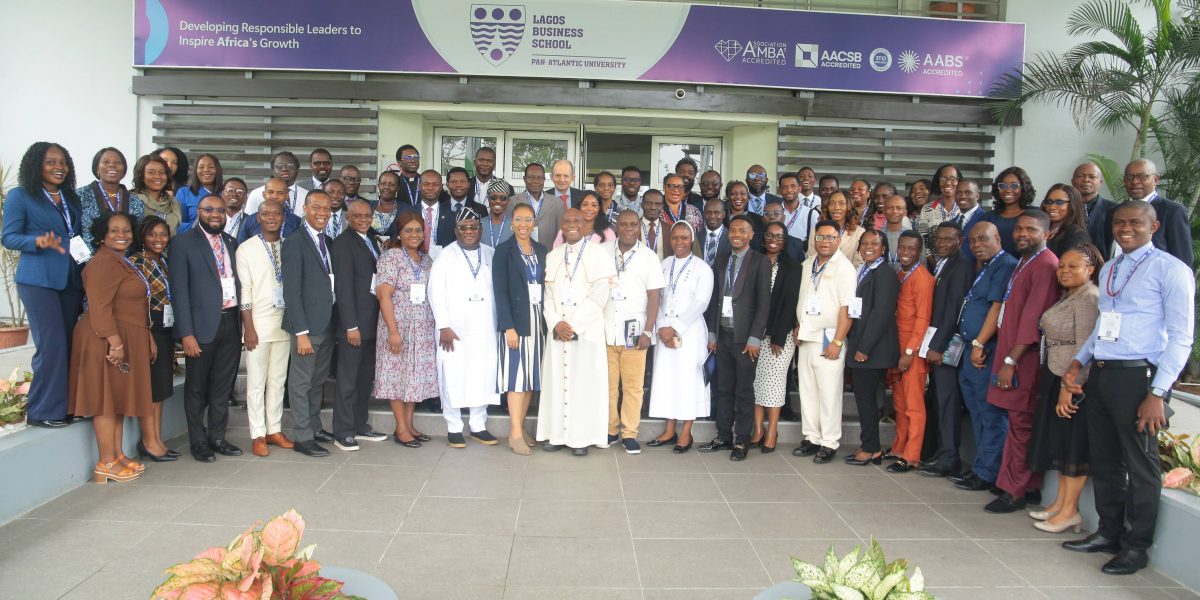
The 2nd International Conference on Governance, Ethics and Technology (GET2), jointly organised by the Institute of Humanities (IOH) at Pan-Atlantic University and Cavendish University Uganda, concluded successfully at Lagos Business School, Lekki Campus from 5–7 August 2026. Under the theme “Safeguarding Democracy in Africa: Electoral Integrity, Responsible Citizenship, and the Role of Technology.” The gathering brought together scholars, policymakers, ethicists, social entrepreneurs, and practitioners for two intensive days of keynotes, panels, breakout sessions, and networking that underscored the urgent need to restore trust in democratic institutions across Africa.
Opening the conference on 6 August, Professor Enase Okonedo, Vice-Chancellor of Pan-Atlantic University, set a thoughtful and unifying tone. She framed the theme as a living challenge rather than an abstract ideal, stressing that electoral integrity cannot be secured by technology alone, nor by institutions operating in isolation from citizens. Drawing on the university’s commitment to ethical leadership and humanistic education, she called for a renewed partnership between universities, civil society, and electoral bodies so that technology serves transparency and accountability rather than becoming a tool for manipulation. Her remarks positioned higher education as both a moral compass and a practical incubator of the responsible citizenship the continent requires, inviting participants to move beyond diagnosis toward actionable renewal.
This opening was powerfully complemented by subsequent contributions. Associate Professor Alice Wabule’s special guest address deepened the ethical and public-policy dimensions, while Professor Obiora Ike’s first keynote, “Ethical Leadership and Democratic Renewal in Africa: Restoring Trust in Electoral Institutions and Safeguarding Electoral Integrity,” offered a rigorous moral framework for rebuilding public confidence. The first panel discussion then translated these ideas into concrete conversations on electoral integrity and democratic governance.
On the second day, Dr Olive Sabiiti, Vice-Chancellor of Cavendish University, and Dr Adaora Onaga, Director of the Institute of Humanities, reinforced the collaborative spirit between the two institutions. Dr Ndidi Nwuneli’s second keynote, “Responsible Citizenship in Africa’s Digital Age: Cultivating Public Trust, Ethical Leadership, and Democratic Resilience,” directly extended the conversation Professor Okonedo had begun, linking digital-era citizenship with the ethical leadership and institutional trust earlier speakers had emphasised. Parallel breakout sessions in the syndicate rooms, the GET1 book launch, a guided tour of the Yemisi Shyllon Museum of Art, and the closing dinner and award presentation in native attire further enriched the experience, turning scholarly exchange into shared purpose and celebration.
By the time the conference closed, participants left with clearer insights into how ethical leadership, active citizenship, and carefully governed technology can reinforce one another. The successful blend of high-level addresses, interactive dialogue, and cross-institutional partnership affirmed GET2’s contribution to the ongoing work of safeguarding democracy in Africa.