
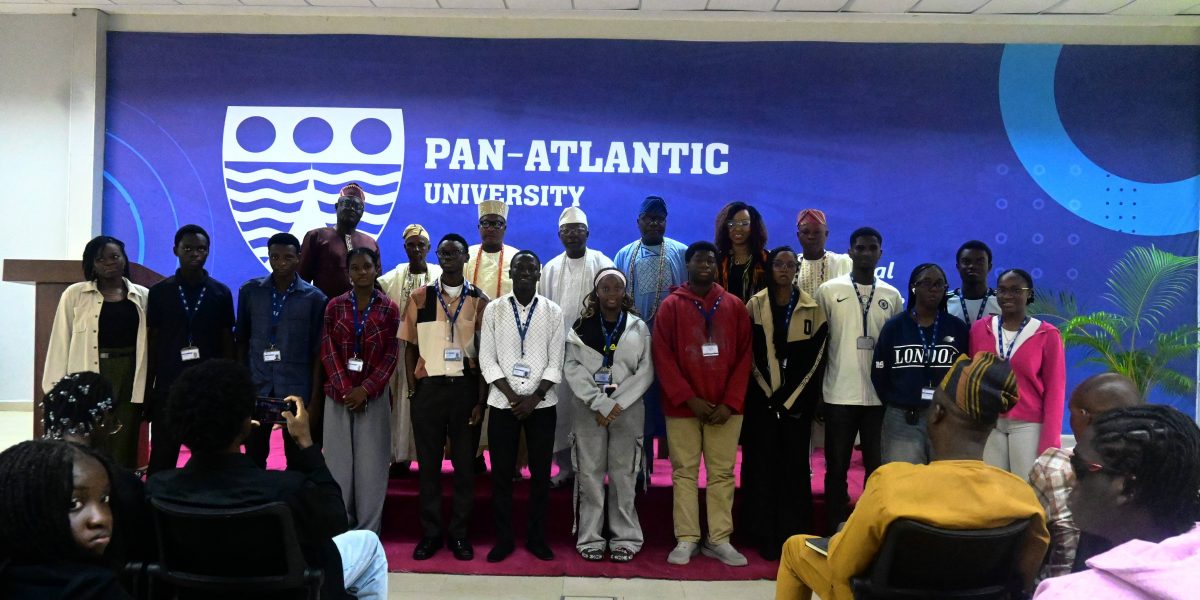
Pan-Atlantic University welcomed distinguished traditional leaders from the Ibeju Kingdom for a special public lecture organised for students taking the Nigerian Peoples and Culture (NPC) course.
The lecture, convened by the facilitators of the NPC course and the management of the Institute of Humanities (IOH), featured representatives of the Onibeju of Ibeju Kingdom and members of the Ibeju Traditional Council. The high-calibre delegation included:
- Chief Okpomoemorua, Representative of the Oni-Ibeju
- Oba Muftau Larrys Idogun, Ologunfayo of Ogunfayo, Iwerekun
- Chief Lakpekun
- Prince Adelaja
- Dr. Adekoya Augustine Adesanya, Representative of the Chairman, Ibeju-Lekki Local Government Area
The interactive session provided students with rare, first-hand insights into the lived realities of indigenous Nigerian culture, traditional governance, and communal identity. At a time when many young Nigerians grapple with cultural disorientation, the lecture offered a timely platform to reconnect with authentic roots, languages, names, communal ethos, and time-honoured values shaped by generations of indigenous wisdom.
Students gained valuable knowledge about the history of Ibeju-Lekki directly from the custodians of the land’s traditions. The session also illuminated how contemporary traditional institutions function alongside Nigeria’s modern political framework, offering a nuanced understanding of governance that transcends textbook learning.
Speaking on the significance of the course, Dr. Albert Onobhayedo, one of the NPC facilitators, described the programme as both an educational and restorative intervention. He characterised it as “a rescue mission” designed to address Nigeria’s crisis of identity while supporting broader nation-building efforts. The course deliberately incorporates themes relevant to conflict resolution, resource management, and the cultivation of a deeper sense of patriotism among students.
The public lecture forms part of Pan-Atlantic University’s commitment to bridging academic learning with real-world cultural engagement, equipping students not only with knowledge but with a stronger sense of identity and belonging in the Nigerian project.
This initiative underscores the University’s dedication to holistic education that values indigenous knowledge systems while preparing future leaders to navigate and contribute meaningfully to Nigeria’s development.